
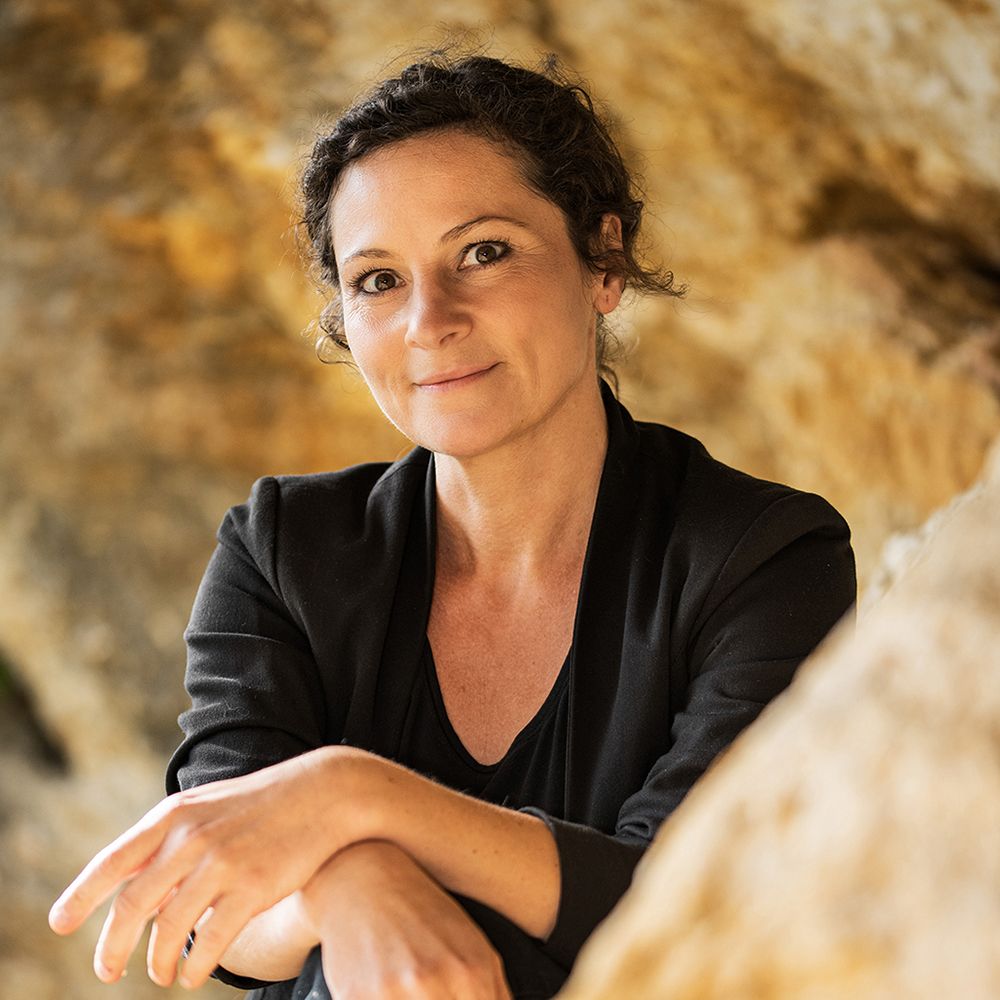
Nadine Trautzsch is a Professor of Game Design and Game Art. With a background as a visual artist specializing in 2D, UI, UX and 3D, she has been working in the games industry since 2007, creating game worlds and educational apps for children. Since 2017, she has been running her own studio, focusing on concept development, archaeological reconstruction, museum exhibitions and user experience. In her work and projects, she uses interactive storytelling, immersive technologies and game elements to make history and information experiential and to create motivating forms of knowledge transfer. Her research focuses on the game design process and the design of soft metrics such as playfulness, immersion and aesthetic qualities of experience.
Co-Authors:
Project “Tag des unsichtbaren Denkmals” (2019) in collaboration with Tina Lorenz (Management of the ZKM | Hertzlabs) and Markus Wolf
Making the Invisible Visible: Producing Playful Cultural Mediation through Game Design and Immersive Storytelling
FROG 2026 – Talk
This talk explores how museums, academia and game design can collaborate to create playful, immersive and narrative formats for cultural mediation. Rather than understanding such projects as simple gamification, it approaches game design as a method for translating exhibits, reconstructions, historical narratives and cultural memory into experiential spaces.
Drawing on practical projects such as the art project for one day: Tag des unsichtbaren Denkmals, which focused on remembrance culture by making overlooked female historical figures visible as statues, the talk reflects on the collaborative processes behind playful cultural production (https://youtu.be/VVSB_pPQPm4?si=gI-IQRAqN9tLfhDq).
And the Augmented Reality App for self-guided tours, the Donautöchter (https://www.youtube.com/watch?v=ygH3VXqs-Gg) , museum exhibitions designed to make history experiential. These projects required close collaboration between craftspeople, scientists, artists, designers, developers and archaeologists, making knowledge transfer and communication central challenges of the design process. The talk therefore asks which skills, methods and forms of translation are needed when curatorial knowledge, historical research, visual design, interaction design and immersive technology meet.
The focus lies on how game elements, spatial narration and immersive media can support orientation, curiosity, empathy and emotional resonance without simplifying complex cultural material. In these formats, audiences are not only addressed as visitors, but as active participants who move through spaces, follow traces, interpret signs and encounter history through perception and interaction.
The talk argues that cultural institutions are not only places of preservation and display, but can become spaces for participatory, process-based and experiential knowledge production. Producing playing art therefore means designing conditions in which audiences can encounter cultural heritage actively, interpret it through their own perspective and experience history as something situated, embodied and shared.