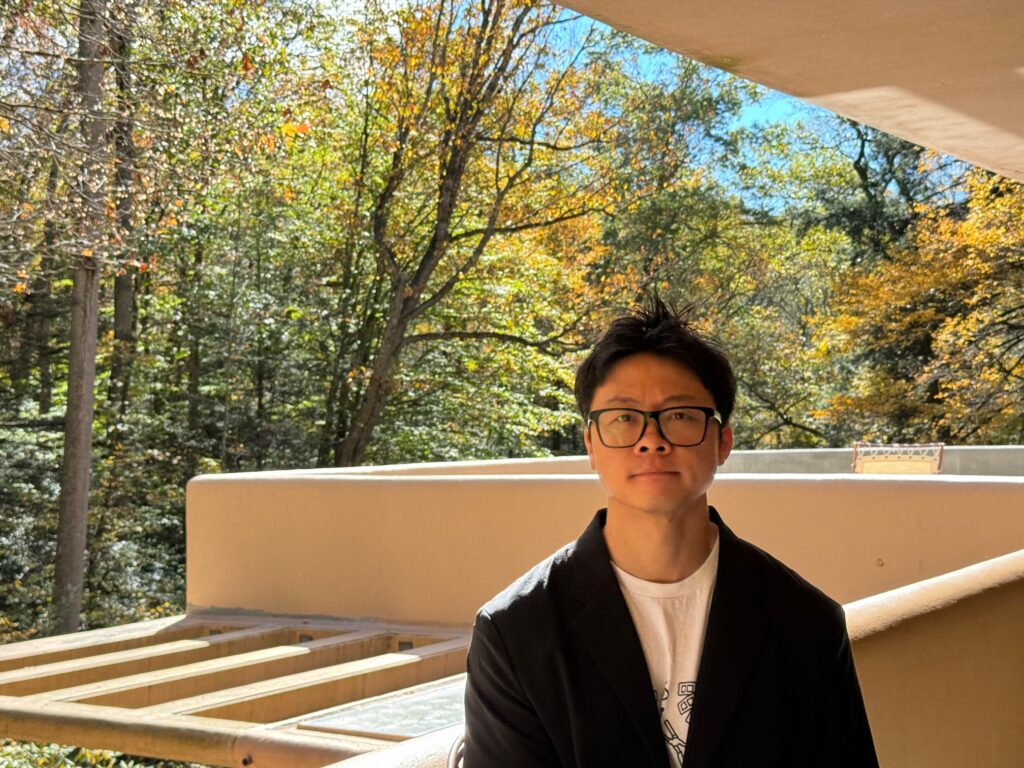
Ruiyu Xu

Her research focuses on video game and copyright law. She also has interests in art games, immersive interactive installations, and non-digital games such as board games and live-action role-playing games.

From Static Exhibitions to Immersive Spatial Narratives: Mechanisms and Cultural Mediation of “Location-Based Scripted Games” in Chinese Museums

FROG 2026 – Talk

“Location-Based Scripted Games” is an emerging gamified format in China’s cultural sector. Evolving from tabletop role-playing and murder mystery games, this genre situates participants within a structured narrative framework by seamlessly integrating physical puzzle props with authentic, real-world environments. This abstract explores how this model transforms static curatorial narratives into dynamic playable environments, thereby reshaping cultural mediation in cultural heritage institutions.

The research focuses on two representative cases. In Echoes of the Past at the Shanghai Museum, ancient artifacts—such as the inscriptions on the Da Ke Ding (a bronze cauldron) and the intricate patterns on bronze mirrors—are deconstructed into core puzzle mechanics. Utilizing physical translucent cards and deciphering dials, players act as “Time-Space Investigators” navigating the actual exhibition halls to solve a parallel-universe anomaly. This design effectively translates solemn artifacts into crucial nodes that drive a non-linear spatial narrative. Similarly, A Dream of Red Mansions at the Suzhou Museum introduces a multi-perspective role-playing mechanism. Participants “possess” different characters from the classic Chinese novel, autonomously exploring the museum to unlock character-specific storylines without the intervention of live NPCs. This approach integrates classical literary aesthetics with the museum’s collections and architectural space.

The study argues that such lightweight gamified interventions, which require no physical alterations to museum infrastructures, successfully dismantle the limitations of traditional, unidirectional knowledge transmission. By superimposing fictional narratives onto authentic physical spaces, this format transforms audiences from passive observers into active co-creators of meaning. Addressing the theme “Playing the Museum,” this research provides a significant theoretical reference and practical paradigm for interdisciplinary interactive design in cultural institutions.



Xu Wei

Xu Wei is a part-time master’s student in Journalism and Communication at Huazhong University of Science and Technology, China, and an employee of State Grid Wuhan Power Supply Company. His academic interests include the philosophy of play and video games, Marxist theory, and literary and aesthetic studies. His current research explores player subjectivity, the ontology of play, and the relationship between play and artistic experience.

Which Play? Two Concepts of Play in the Playable Museum

FROG 2026 – Talk

“playing art” conceals an equivocation, and the ambition behind it has a precedent. Huizinga’s attempt to ground all of culture in play was criticized for an expansiveness that explained everything and therefore little; the current institutional enthusiasm for making everything playable repeats that gesture, this time with budgets and deliverables.

Aesthetic theory has had a concept of play at its center since Kant and Schiller, and Gadamer puts it most sharply: play is the mode of being of the artwork itself. On that account play has no subject. The game plays its players, and the beholder is not outside the work but is the one for whom it is performed. Fink extends this by treating play as a symbol of world rather than a derivative copy of the real. Play here is mediating, subjectless and not available for possession.

Playable mediation means something else: rule systems, goals, feedback, win conditions. In Caillois’s terms, institutions invoke paideia and build ludus. This paper argues that making art playable does not add play to art but substitutes one concept of play for another, while borrowing the legitimacy of the concept it displaces.

The substitution can be specified. Where the hermeneutic account admits no mapping between participant and work because it admits no subject, a playable system installs one. Three consequences follow. First, the beholder must be individuated in order to occupy the domain of that mapping, so anonymous and interruptible presence gives way to a stateful session. Second, interpretation becomes reachability: meaning must lie at the end of some operable path, and whatever cannot be written as a path cannot be registered by the system. Third, what exceeds the mapping is not merely unused but rendered invisible, a surplus on the side of the work rather than the player.

Two asymmetries follow. One is moral: the same act carries incompatible valences inside and outside the play frame. One is epistemic: play is transparent to those who hold its rules and opaque, tedious or threatening to those who do not. Together they determine who is admitted to the circle and who watches from outside it, and that boundary is drawn by design rather than by consent.

The paper does not argue against playable art. It proposes a different question to ask of such projects: not whether they are engaging, but whether they have a subject, and whether the participant is permitted to be played rather than to win.


Markus Wiesenhofer & Eva Fischer

Markus Wiesenhofer, born in Graz in 1975, is Deputy Director of Communications and Marketing at the Belvedere Museum in Vienna. He studied tourism management at the University of Applied Sciences IMC Krems and postgraduate „Public Communication“ at the University of Vienna (MA master degrees) and began his career as Marketing Manager in New York (2001-2004) for the Austrian Tourist Office. Later he became leader of the team International Markets and Strategy at the Austrian National Tourist Office in Vienna (2004-2011). From 2012 until 2017 he was head of strategy and development of the Schönbrunn Group in Vienna. At the Belvedere he is now project coordinator for digital innovation and Belvedere Games. He frequently lectures on Arts Tourism and Marketing at Universities in Austria.

Eva Fischer is an independent curator, festival director and cultural manager working at the intersections of post-digital art, experimental film, critical media theory, and art, science and technology. She studied Art History and Cultural Management in Graz, Utrecht and Vienna. Since 2021, she has directed CIVA, a platform for media art. In 2007, she founded sound, which became known as Vienna’s festival for audiovisual art and has operated as a platform for artistic research in media art and film since 2016. From 2016 to 2019, she was Head of Production at Diagonale – Festival of Austrian Film. From 2023 to 2025, she served as COO of the International Screen Institute, where she currently works as Programme Director of “Future Ready” and the “Hands-on AI Lab for Producers“. Since 2011, she has taught experimental media and immersive formats at various universities and universities of applied sciences. https://evafischer.org/

Photo Credits: Ina Aydogoan

Contemporary Immersive Virtual Art / Belvedere Games

FROG 2026 – Talk

Markus Wiesenhofer presents the story of „Belvedere Games“: How museums use the power of gaming to create meaningful connections to art. As part of the digital innovation strategy and fulfilling the mission as „a museum that matters“, interactive games became an important new field of operation for the institution. The short talk shows the process from directing attention, ressources and engagement to a successful games portfolio. Building on a digitized art collection and art mediation expertise, we created educational games that are accessible, entertaining and safe. What initiated with a pilot in 2023 for the 300 year anniversary of the Belvedere grew into a solid 3 pillar games strategy: 1) Experiences to enrich the family visit on-site. 2) Games to attract young global audience 3) Collaboration with the game developer scene (Game Jams, access to online art collection). Hosting the 20th FROG conference for the first time at Belvedere 21 museum is a major milestone in our effort to connect academics, creators and the art-world. Link: https://www.belvedere.at/en/games

Contemporary Immersive Visual Art (short: Civa) highlights the interplay between contemporary technologies, realities, and experiences across digital, physical, and hybrid spaces. In its sixth edition, Civa once again presents an exhibition at the Belvedere 21, alongside a diverse program of talks and discussions, film screenings, and live performances. Civa 2026, titled postacceleration, explores the dynamics of speed and simultaneity. The term postacceleration refers to a condition in which acceleration has become the default setting—an essential premise of contemporary existence. With works by: Eyez Li (Mingtong Li), Nolan Oswald Dennis, Kyriaki Goni, Silke Grabinger, Letta Shtohryn. Festival Director and Curator Eva Fischer shares insights and invites FROG participants to visit the current exhibition (free with your FROG admission). Link: https://www.belvedere.at/civa-2026


Zehui Zhou & Xiaoxuan Huang

Zehui Zhou (Claire) is an independent scholar in game studies and a former user researcher from the gaming and fintech industry. She conducts her research projects in Chinese, English, and Japanese. Her research interests include women’s gaming experiences, video game characters, and how video games represent social identities, gender issues, and cultural phenomena. Claire got her MSc degree from The University of Hong Kong, and is an associate member of Sigma Xi, the scientific research honor society.

Xiaoxuan Huang currently is a PhD student at the Academy of Film, School of Creative Arts, Hong Kong Baptist University. Her research examines why and how cultural heritage is transformed into playable experiences through the production, circulation, and reception of video games. Her work is currently focusing on China and investigates the relationships among game companies, cultural institutions such as museums, tourism organizations, players, and local communities. Her work explores how these actors select, interpret, and represent cultural heritage; how games reshape public engagement with history and tradition; and how playable heritage contributes to cultural communication, and identity formation. Her research bridges game studies, heritage and museum studies, and media industries.

Nested landscapes and player identity: how the visual and gameplay design of Temple of Space in Genshin Impact affects the boundary between player and avatar

FROG 2026 – Talk

In terms of the interactions between video games and museums, scholarly discourses mostly fall into the representation of museums in video games (e.g., Giddings, 2013) and how video game museums in reality facilitate the preservation of video games and play culture (e.g., Eklund, Sjöblom & Prax, 2019). Little attention, however, is paid to the practice of building an in-game museum of the game itself and corresponding theoretical implications regarding the player’s identity recognition.

To fill in this gap, the research selects Temple of Space, an explorable space in one of the most popular long-term operated anime-style gacha games, Genshin Impact (GI hereafter), as the case for study. Through the theoretical lens of Phenomenology of Perception (Merleau-Ponty, 2002[1945]) and by analyzing the interaction and visual design of this space using the MDA framework (Hunicke et al., 2004), we uncover how Temple of Space is presented as an in-game museum of the game itself and further argue that, by creating such a museum-like visiting experience and mimicing the process of curating exhibitions, the gaming experience in this space results in the blurring of boundary between the player and the avatar: while the player explores Teyvat (i.e., the world in GI) through the material interface of their devices, the avatar (i.e., Traveller) simultaneously recall their journey in Teyvat through snapshots of scenarios and exhibited heritage in the space, leading to the overlap between the player’s objective body and phenomenal body.

This study extends the examination of the player–avatar relationship (e.g., Klevjer, 2012; Martin, 2012) by demonstrating how museum-like space design enables players to revisit virtual worlds both through the avatar, the extension of their embodied experience, and through their own museum-going experience, thus reinforcing their identification with and cultural memory of the virtual worlds.

References:
Eklund, L., Sjöblom, B., & Prax, P. (2019). Lost in translation: Video games becoming cultural heritage? Cultural Sociology, 13(4), 444–460. https://doi.org/10.1177/1749975519852501
Giddings, S. (2013). SimKnowledge: What museums can learn from video games. In M. Henning (Ed.), International handbooks of museum studies (pp. 145–164). Wiley. https://doi.org/10.1002/9781118829059.wbihms307
Hunicke, R., LeBlanc, M., & Zubek, R. (2004). MDA: A Formal Approach to Game Design and Game Research.
Klevjer, R. (2012). Enter the Avatar: The Phenomenology of Prosthetic Telepresence in Computer Games. In J. R. Sageng, H. Fossheim, & T. Mandt Larsen (Eds.), The Philosophy of Computer Games (Vol. 7, pp. 17–38). Springer Netherlands. https://doi.org/10.1007/978-94-007-4249-9_3
Martin, P. (2012). A phenomenological account of the playing-body in avatar-based action games. The Philosophy of Computer Games Conference, Madrid.
Merleau-Ponty, M. (2002[1945]). Phenomenology of Perception. (C. Smith, Trans.) London: Routledge.


Xiaoxuan Huang & Zehui Zhou

Xiaoxuan Huang currently is a PhD student at the Academy of Film, School of Creative Arts, Hong Kong Baptist University. Her research examines why and how cultural heritage is transformed into playable experiences through the production, circulation, and reception of video games. Her work is currently focusing on China and investigates the relationships among game companies, cultural institutions such as museums, tourism organizations, players, and local communities. Her work explores how these actors select, interpret, and represent cultural heritage; how games reshape public engagement with history and tradition; and how playable heritage contributes to cultural communication, and identity formation. Her research bridges game studies, heritage and museum studies, and media industries.

Zehui Zhou (Claire) is an independent scholar in game studies and a former user researcher from the gaming and fintech industry. She conducts her research projects in Chinese, English, and Japanese. Her research interests include women’s gaming experiences, video game characters, and how video games represent social identities, gender issues, and cultural phenomena. Claire got her MSc degree from The University of Hong Kong, and is an associate member of Sigma Xi, the scientific research honor society.

When Personified Heritage Become Playable: Chinese Mobile Games as Interactive Museums

FROG 2026 – Talk

Digital games function as cultural interfaces through which players encounter literature, heritage, history, and national aesthetics. This paper examines two Chinese Guofeng mobile games, Wu Hua Mi Xin and The Tale of Food, as interactive museums. Both use personification as a strategy: Wu Hua Mi Xin transforms museum artefacts into collectible Qi Zhe, while The Tale of Food personifies Chinese cuisine as characters. The paper asks how Chinese mobile games make cultural heritage playable and accessible to digital-native players.

Drawing on digital heritage and game-based heritage interpretation, the study brings Anderson’s (2019) “video game as interactive museum” into dialogue with Champion’s (2011) theory of playable heritage. Rather than merely representing cultural objects, these games embed artefacts, cuisine, historical memory, and symbolism within collection, character attachment, narrative progression, and aesthetic participation. In Wu Hua Mi Xin, for example, the character T-shaped Silk Painting is based on the Western Han painting excavated from Mawangdui Tomb No. 1. Its profile includes museum-label-like information about the artefact’s history and current location.

Methodologically, the paper combines qualitative game content analysis with autoethnography, examining the researcher-player’s encounters with character biographies, lore, interfaces, collection systems, gacha mechanics, voice lines, and affective aesthetics. This approach considers how cultural knowledge is experienced through repetition, desire, emotional attachment, and everyday mobile play, and how game texts exceed museum labels through animation, intimacy, interactivity, and player investment.

The paper argues that personification transforms cultural heritage into playable media. While Wu Hua Mi Xin foregrounds museum collections and institutional heritage, The Tale of Food draws on culinary culture, regional identity, and everyday cultural memory. Both invite players to collect, care for, preserve, and learn about heritage through play. Guofeng games can therefore operate as interactive museums by extending museum-like interpretation into mobile environments and reconfiguring heritage as an affective, participatory, and culturally situated experience. This model also contributes to negotiations of cultural identity, nationalism, and heritage revitalization.


Xiaoying Duan

Xiaoying Duan is a postgraduate student at The Hong Kong Polytechnic University. Her research interests include immersive narrative, gamification, museum education, and cultural heritage communication, with a particular focus on how interactive storytelling enhances audience engagement and learning experiences.

Female Perspective as a Framework for Museum Game Design: Experience Mechanisms and Cultural Learning

FROG 2026 – Talk

As museums increasingly emphasize participatory experiences, museum games provide young audiences with new ways to engage with and understand art and cultural content. However, existing museum games tend to focus on interactivity and entertainment, with less attention to how a specific narrative perspective can shape an agentive game experience and promote cultural participation. This study explores how a female perspective can be translated into experiential mechanisms in museum games, and how these mechanisms can create new approaches to art learning and cultural participation. Drawing on theories of immersive game experience and female perspectives in museum visiting, this study develops a conceptual model comprising four design principles: relational storytelling, emotional progression, multi-level interaction, and story recap, which are examined through the design and user testing of the museum game Voyage of the Sailing Seas. A mixed-methods approach was adopted, combining a questionnaire survey on visitors’ perceptions of gender bias in museum narratives with gameplay and post-game interviews. The findings show that the female perspective can function not only as a narrative theme but also as a framework for developing experiential mechanisms, enabling players to actively construct cultural meaning. Among the four mechanisms, multi-level interaction and story recap had the strongest influence: the former encouraged active exploration of exhibition spaces and cultural content, while the latter helped players reorganize information from gameplay and revisit the exhibition through its official narrative. This study proposes that the female perspective can serve as a framework for generating game mechanisms rather than simply as a content label for female audiences, enabling museum games to function as a medium connecting gameplay with art learning and providing young audiences with a pathway from active exploration and meaning-making to cultural understanding and participation.


Sarah Kiszter & Marko Mele

Sarah Kiszter studied Classical Archaeology at the University of Graz and trained as a certified CAD technician. Has participated in and supervised numerous archaeological excavations both domestically and abroad. Since 2013, she has served as a research associate, EU project staff member, and collection curator in the Department of Archaeology & Coin Cabinet at the Universalmuseum Joanneum. Her responsibilities include the scholarly management of the collections (storage and specialized library holdings), the curation of special exhibitions, and the planning, acquisition, and management of external research projects.

Marko Mele studied Archaeology at the University of Ljubljana and completed doctoral research as a DAAD fellow at the Free University of Berlin. Specializes in the Bronze and Early Iron Age of the southeastern Alpine region. After working as an archaeologist at the Ptuj-Ormož Regional Museum and serving as an EU project evaluator for the Slovenian government, he joined the Universalmuseum Joanneum in 2010. As chief curator of the Pre- and Early History collection, he led multiple European projects—including InterArch-Steiermark, PalaeoDiversiStyria, Iron-Age-Danube (a RegioStars 2018 finalist), and Danube’s Archaeological eLandscapes—and helped establish the transnational Iron Age Danube Route, certified as a Cultural Route of the Council of Europe. Since 2017, he has served as deputy head of the Department of Archaeology & Coin Cabinet, and since 2023 as scientific managing director of Universalmuseum Joanneum GmbH. In 2022, he received the Slovenian Archaeological Association’s award for outstanding contributions to Slovenian archaeology.

A Time Travel Experience? Game-Based VR Mediation of Archaeological Landscapes

FROG 2026 – Talk

Time travel has long captured the imagination. In the exhibition “Stories of the Past” (2022–2023), presented at the Archaeology Museum of the Universalmuseum Joanneum and in eight museums across the Danube region, visitors could experience virtual reconstructions of archaeological landscapes using VR headsets. The project was part of the EU Interreg project “Danube’s Archaeological eLandscapes”, which aimed to increase the visibility of archaeological heritage and examine how digital storytelling could support new forms of audience engagement. This article examines how game-based approaches to visualisation were used to communicate archaeological content and encourage participation.

Creative Labs & Hubs: Co-Developing Playful Learning
The development of the VR experiences included a series of participatory workshops known as Creative Labs & Hubs. Over five sessions, archaeologists, museum educators, IT specialists and members of the public contributed to the development of the narratives and interactive elements. A central aim was to combine archaeological accuracy with an accessible and engaging format. The resulting storyboards provided the basis for a series of game-like scenes introducing users to architecture, craftsmanship, burial practices and everyday life in the Iron Age settlement at Großklein and the Roman town of Flavia Solva.

Evaluating Game-Based Mediation
The exhibition opened in April 2022, accompanied by an international visitor survey evaluating the VR applications. In Austria, 1,034 visitors completed questionnaires following guided VR sessions. Across all partner countries, the survey collected 4,667 responses. The University of Vienna (Linzbauer & Fera) led the analysis, examining the audiences reached through the VR applications, the difficulties encountered during their use, and the potential of game-based formats for museums and other informal learning environments. The survey findings suggest that collaborative development and game-based approaches can support access to archaeological content and encourage different forms of museum participation.


Sha Huang

Sha works at the intersection of game studies, digital cultural heritage, HCI, and museum engagement, combining art, media, design, and technology. As an IASH Postdoctoral Fellow at the University of Edinburgh, he collaborates with National Museums Scotland on games and encounters with cultural heritage. His PhD in Fine Arts at Texas Tech University was shaped by interdisciplinary HCI work with Media and Communication researchers. His research examines how cultural knowledge is translated through interactive systems, including questions of simplification, power, authorship, and ethics in digitization. Before academia, he worked in media, advertising, interior design, and web design, experiences that continue to shape his cross-disciplinary approach to research and public engagement.

From Visual Analysis to Procedural Translation: Designing Hmong Batik as Playable Digital Heritage

FROG 2026 – Talk

Digital cultural heritage initiatives have often relied on a scan-and-archive model that prioritizes visual capture over cultural context. While such approaches preserve images, they risk separating motifs from the material, procedural, and cultural relationships that give them meaning, reducing them to decorative content rather than living knowledge.

This project develops a pilot workflow for responsible digital documentation and museum-based game interpretation of living cultural heritage, using Hmong batik as a case study. It examines how craft traditions can be documented not only as visual forms but as contextual and culturally bounded knowledge, and how such documentation can support interactive visitor engagement. Rather than proposing a fully generalizable model, the project produces a bounded and testable method that can inform future work with textile- and craft-based heritage. It would contribute to National Museums Scotland’s work with global collections by offering a practical approach for linking collection materials to making processes, interpretive narratives, permissions, uncertainty, and public-facing digital engagement. In this project, video games are treated not simply as digital outputs, but as interpretive interfaces through which museum visitors can encounter making processes, symbolic meanings, and cultural limits of access.

The project is guided by three questions: (1) How can living cultural heritage be documented for museum-based digital interaction while preserving material, procedural, and cultural contexts? (2) How can cultural permissions, uncertainty, and interpretive boundaries be translated into interactive design? (3) To what extent can a prototype support visitor understanding of process, meaning, and limits of access?


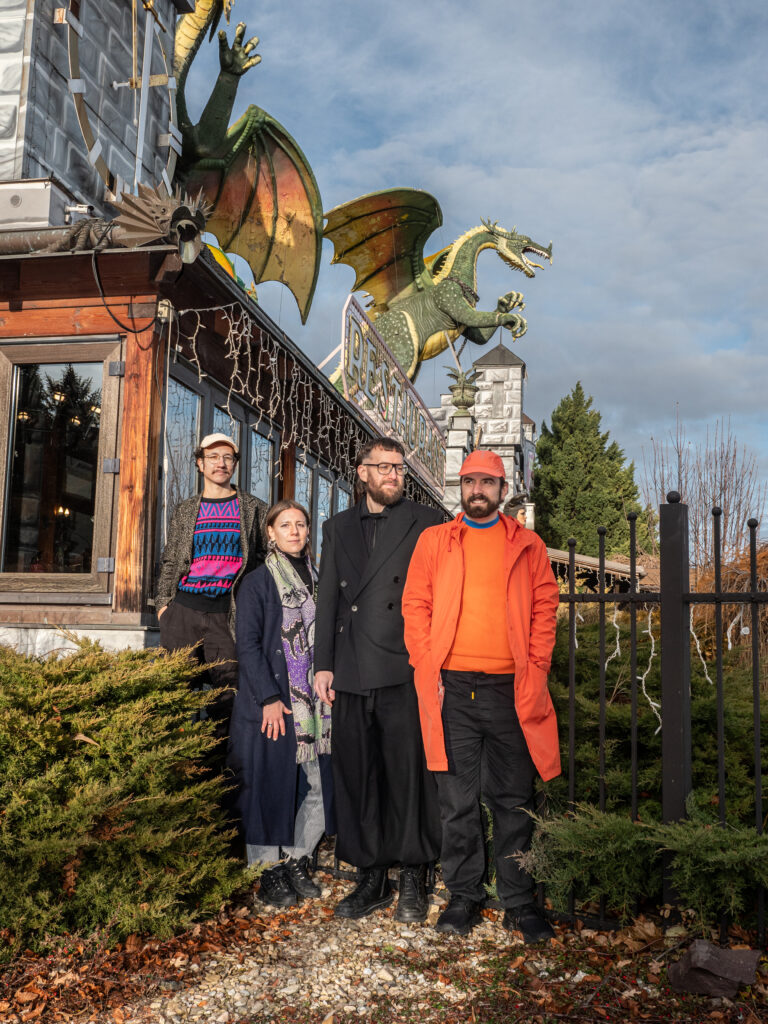
Total Refusal

Total Refusal is an artist, researcher and filmmaker collective and marxist media guerrilla (Susanna Flock, Robin Klengel, Leonhard Müllner, Michael Stumpf) that appropriates and upcycles contemporary video games, writing about games and politics. Informed by game studies and social theory, the collective’s work aims to promote and popularize a counter-hegemonic left.

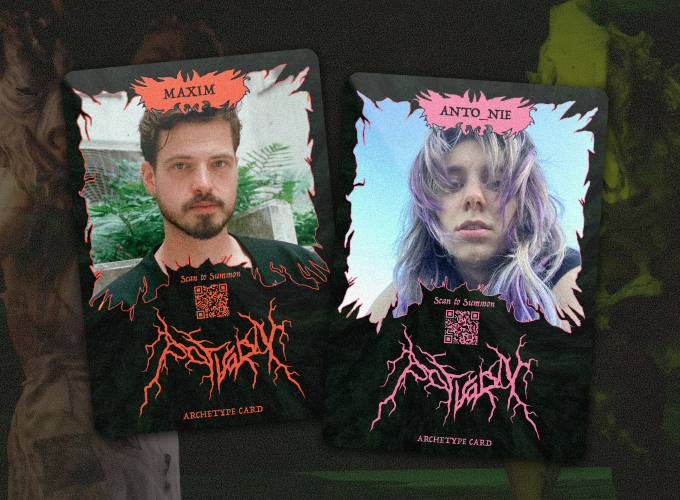
Studio Tvora (anto_nie & Maxim Shchapov) is an interdisciplinary artist, game designer, educator and facilitator, focusing on folklore, monstrosity, environmentalism and herbal knowledge. Working with narrative game mechanics of role-playing games, 3D, game engines, immersive audio and other means of building communal (non)physical spaces, anto_nie creates miniatures, leads workshops and educational programs.

ALL QUIET IN THE WEST – Identity Politics of the Eastern European Gaming Industry

FROG 2026 – Talk

ALL QUIET IN THE WEST examines how Eastern European video games influence and reshape Western gaming hegemony through their specific mythologies and lore. The Marxist media collective Total Refusal (AT) and Studio Tvora (CZ) discuss the politics behind the construction of Slavic folklore, nation-building, broken utopias, and speculative memories emerging from contemporary Eastern European game studios.

The history of Slavic identity—including Slavic paganism and prideful mythmaking—was forged by 19th-century Romanticism and is still mirrored today in hyperreal video games. So too are collective memories of victimhood from the end of the 20th century. How do popular Eastern European games influence the industry as a whole, as seen in the ARMA and The Witcher series?

Subsequently, Studio Tvora shares how it critically plays with Slavic myths and how these myths influence its game-based practice, while Total Refusal discusses how to turn a hypermasculine nation-building video game into a feminist manifesto through machinima, modding, and essayistic strategies.


Klara Maaß

Klara Maaß studied history and archaeology in Innsbruck from 2018 to 2022. She recently completed her master’s degree in “Museum Studies” at Central European University in Vienna. Her research focuses on the intersection of history, digital humanities, and cultural education.

Co-Author:
Marlene Galaz holds a Master’s in Social Policy from the University of Oxford and a Bachelor’s in Global Studies and Public Policy from the University of California, Los Angeles. Most recently, she collaborated as a community curator on Wien Museum’s Viena Latina and as a workshop facilitator in the artist’s initiative QMA. Previously, Marlene was Policy Director at the New York Immigration Coalition, where she incorporated participatory and creative practices into her advocacy work. She has also led participatory workshops with formerly incarcerated migrants. In her museum work, Marlene’s focuses on including community participation beyond programs and into exhibitions and collections.

By boat, train and horse: How museums can use interactive decision making games as educational methods

FROG 2026 – Talk

Using “Aj Xíinbal”, a game prototype developed in a workshop hosted by the Welt Museum and the Central European University, this presentation explores how video games can reshape the way visitors engage with collections and museum narratives.

“Aj Xíinbal” was developed as an educational point-and-click narrative game, using the Welt Museum’s Mexico collection, as well as works from the Mexican art history canon, as narrative devices. Set in 1890s Mexico, the player accompanies an archaeological expedition to Kabah, Yucatán, and through their choices indirectly determines the fate of the objects encountered: whether they are privately sold, sent to a European museum, integrated into a community museum, or left undisturbed.

The game was created with critical fabulation as a methodology for working both with and against the archive, engaging its silences, omissions, and violences while imagining and reconstructing what was not recorded by the official narrative. Through a speculative decision-making framework, players inhabit different positions within a colonial encounter and experience divergent historical and ethical possibilities. “Aj Xíinbal” stages an active encounter with the museum’s collection, giving the player the agency to question an institution’s singular authoritative narrative in favor of developing their own ways of engaging with collections and the ethics of collecting. The project therefore facilitates visitor engagement in interpreting a collection, encouraging them to reflect on how museums curate not only exhibitions, but also museological narratives.