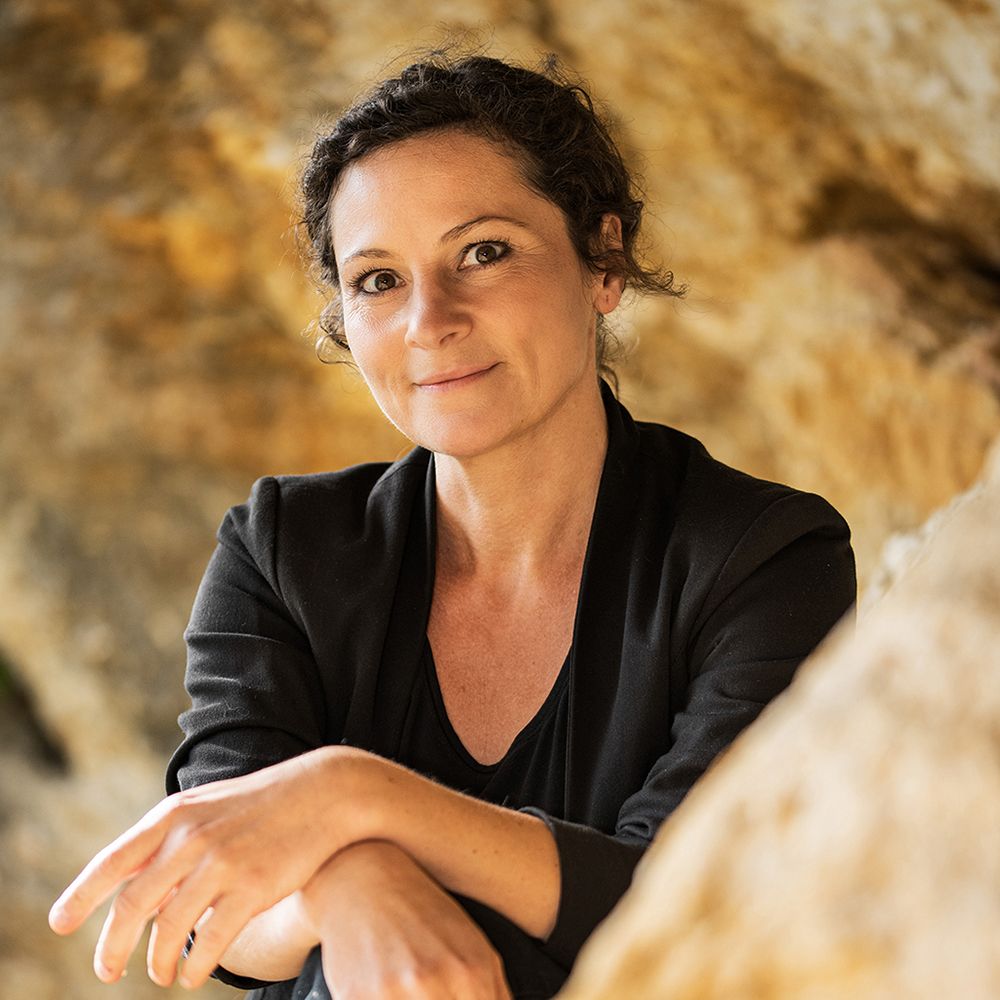
Prof. Marion Plank is a game artist, researcher, and Professor of Game Art at IU International University of Applied Sciences. Her work explores games as artistic and cultural media, with a particular interest in interdisciplinary and experimental forms of game development. She is the initiator of GAMEPATHY, a conference and podcast exploring games, empathy, and society, and co-founded the art and game collective Try&Error. Her current projects investigate the intersections of traditional art, game art, participatory development, and artistic research.
Playing the Painting: From Empty Canvas to Game World
FROG 2026 – Talk
What happens when a painting is not merely represented in a game, but becomes the starting point for a playable system? This presentation examines the interdisciplinary project THE PAINTING, developed by contemporary artist Benjamin Burkard and the student-led game development collective Try&Error, as a practice-based case study in translating analogue art into interactive game space.
The project originated during a 48-hour live development experiment at the Mannheimer Kunstverein, where Burkard’s artistic practice was translated into the prototype “Oxidierter Quellcode”. Its continuation, THE PAINTING, expands this experiment into a narrative game in which surreal paintings, sculptural objects, and artistic processes become environments, mechanics, and objects of interaction. Rather than treating the original artworks as visual assets or reproducing them digitally, the development team asks which formal and conceptual qualities of an artwork can become playable: How can composition become spatial navigation? How can an artistic motif become a mechanic? And what is gained – or lost – when spectatorship is replaced by player agency?
The presentation reflects on these questions through the ongoing collaborative development process between artist, game designers, programmers, and students. Particular attention is given to live development in exhibition spaces (so called Museum Game Jams), where normally invisible production processes become part of the artwork itself. Visitors can observe development, discuss decisions with the team, and play intermediate versions, introducing an additional feedback loop between artwork, developers, institution, and audience.
Finally, the project raises a practical question inherent to hybrid cultural production: How can work situated between contemporary art and game development be funded? Drawing on Try&Error’s experience with cultural funding and game development media funds, the presentation reflects on how projects that cross disciplinary boundaries must also navigate the funding structures surrounding them.
More about the project: http://www.tryanderrorgames.de